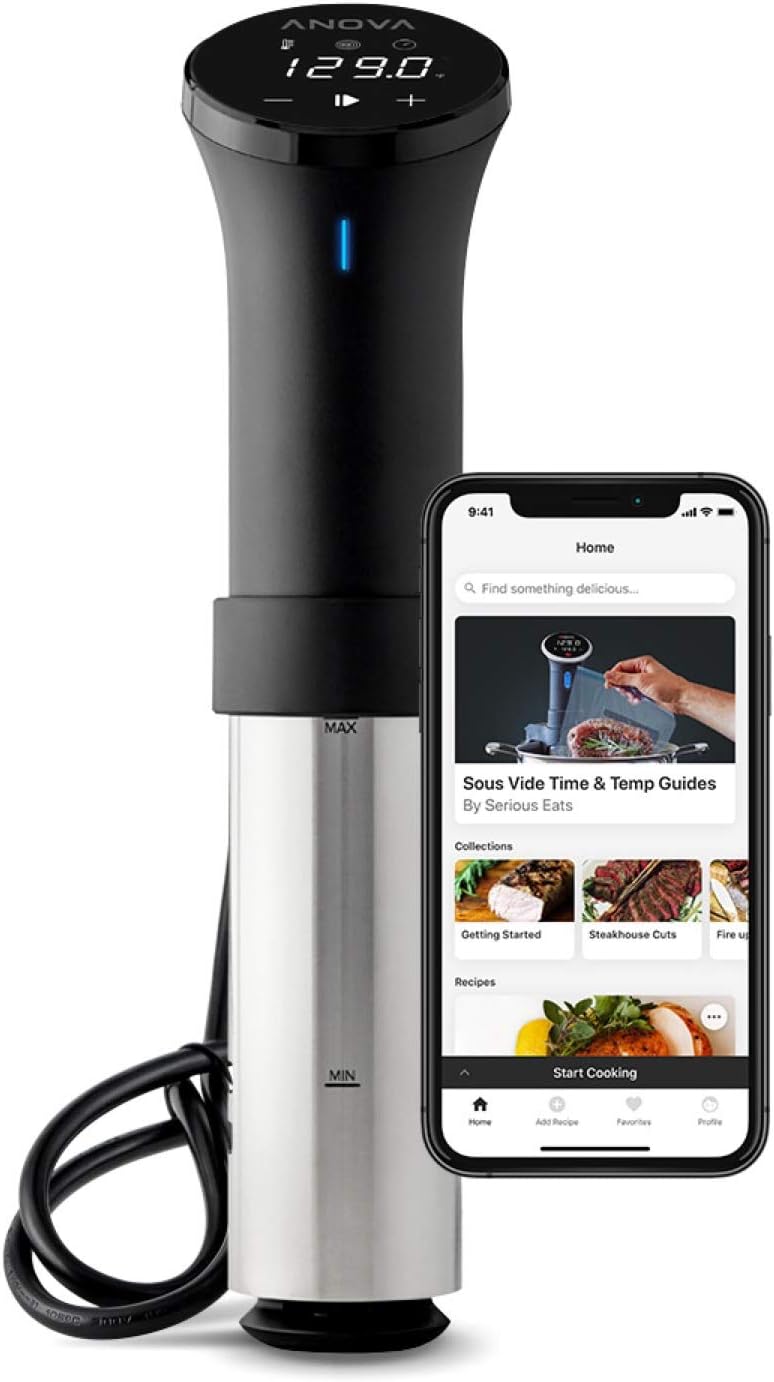
The Pro is rated for continuous heavy use — a stronger pump than the standard Anova Nano and faster heat-up on large containers. The clip is more secure on thick-walled containers. App connectivity is genuinely useful for long cooks where you want a finish-time alert. At ~$250 it's twice the Inkbird, so the question is volume: if you cook sous vide steaks, eggs or chicken regularly, the Pro pays for itself in years of use. Anova has the longest software-support track record in the category, which matters because abandoned circulators with broken apps are common from defunct brands.
Honest caveat: if you'll only cook sous vide a few times a year, the Inkbird below does the same job at less than half the price. The Pro earns its premium on frequency and pump strength, not on accuracy.
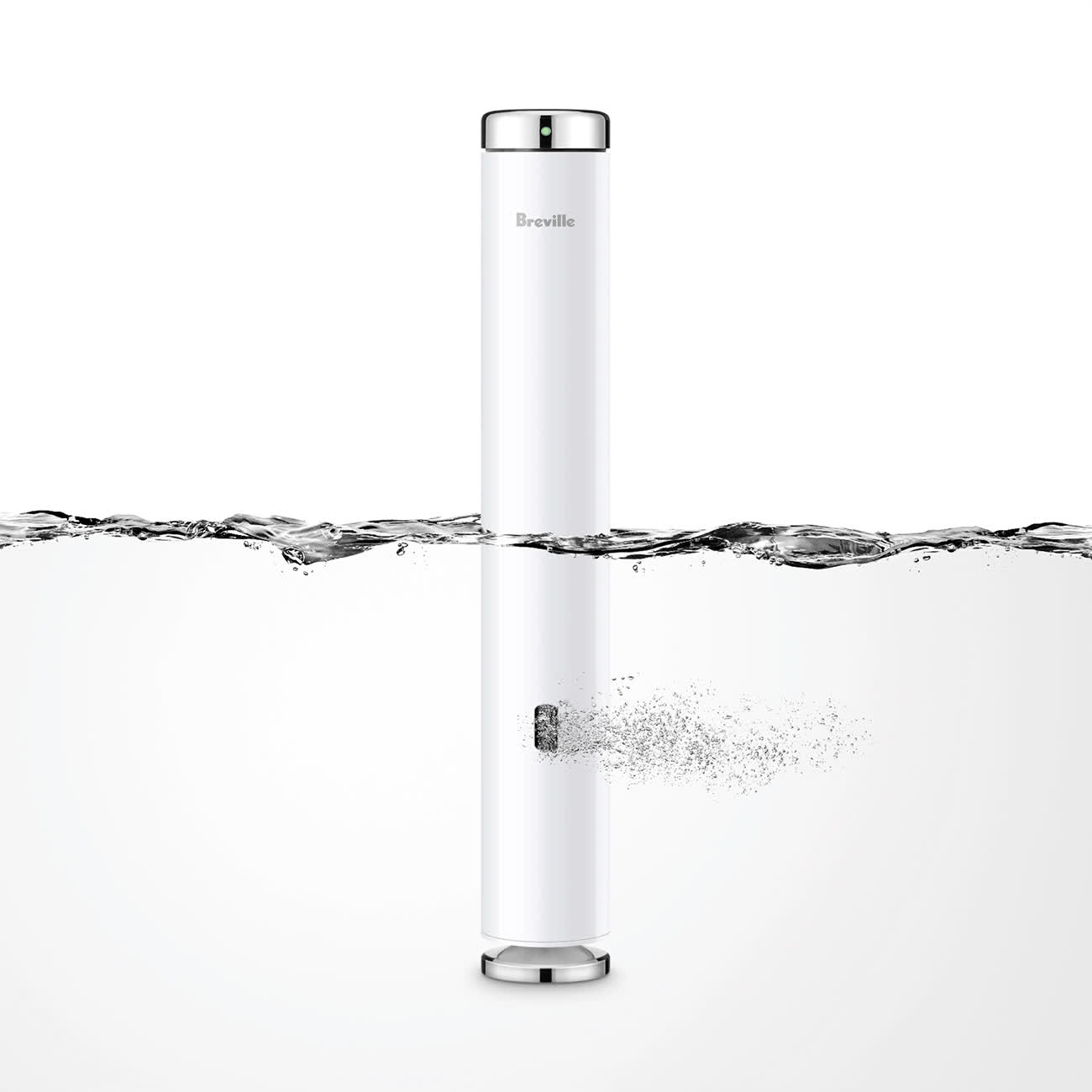
The Joule Turbo's 1100 W element heats four quarts of water at about 6.8°F per minute — meaningfully faster than the Anova Pro's 1200 W (the difference is heater design, not wattage) and significantly faster than the Monoprice Strata's 800 W. Turbo mode further compresses come-up time by briefly overshooting the target then settling. The unit is roughly half the size of the Anova, which matters in apartment kitchens where countertop storage is the binding constraint. App-only — there are no physical buttons on the device, which some cooks dislike and others prefer. Breville's app ecosystem is mature and stable.
Honest caveat: app-only means a dead phone or app outage leaves you without manual override. If that scenario worries you, the Anova Pro has physical buttons as a fallback.
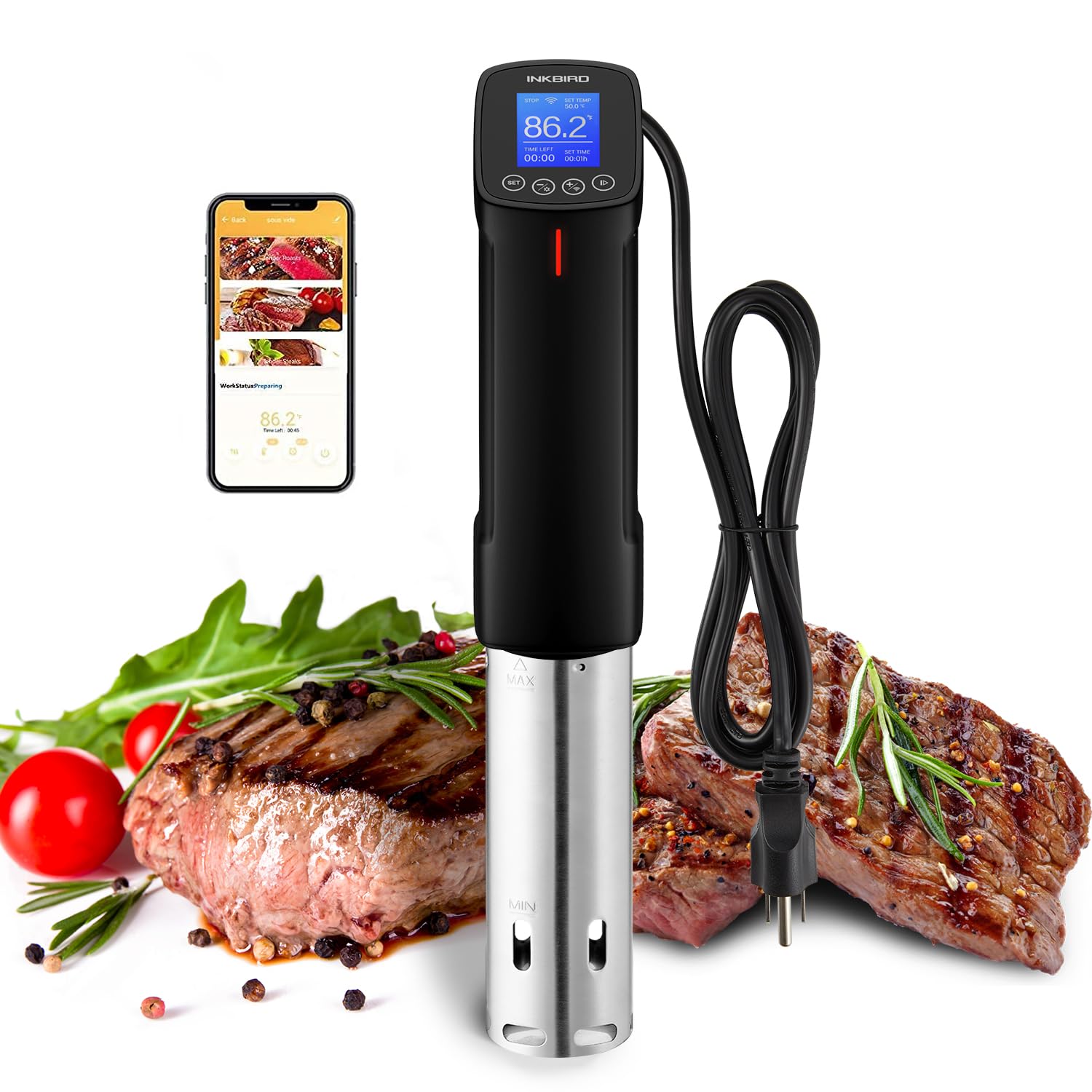
The ISV-100W holds water within ±0.1°C — same accuracy spec as the Anova — at roughly $100. The pump is weaker so heat-up on large containers is slower, and the build quality is plastic rather than the Anova's metal-shafted feel, but for steaks, eggs, chicken breasts and pork the result is identical. App control over Wi-Fi works reliably. Where it shows its price is on heavy or daily use: the motor isn't rated for continuous duty the way the Pro is, so 24-hour brisket cooks are not its strong suit. For the once-or-twice-a-month home cook, it's the smarter purchase by a wide margin.
Honest caveat: long unattended cooks (overnight brisket, 36-hour short ribs) work better on the Anova Pro's continuous-duty pump. For everything else the Inkbird matches it on the metric that matters — water temperature.
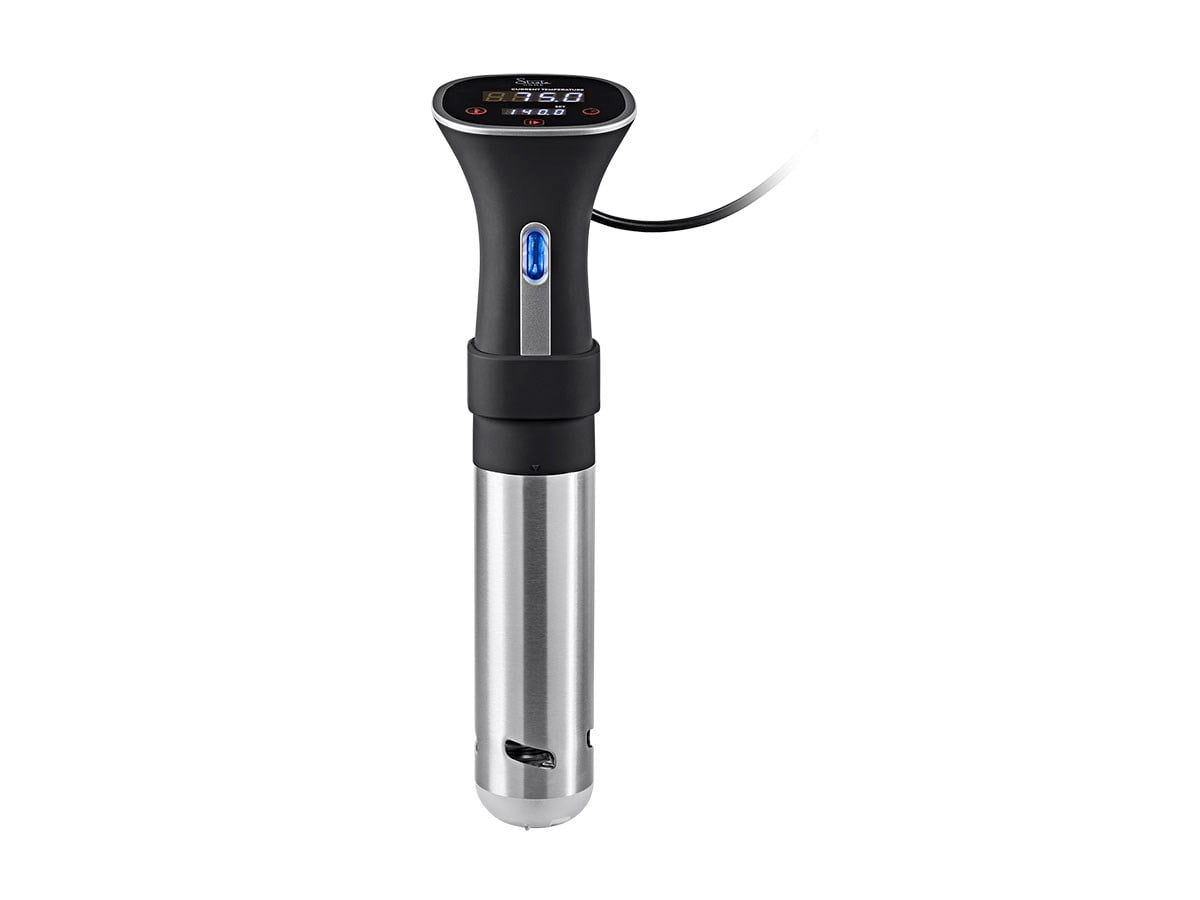
The Monoprice Strata heats at about 4.55°F per minute — slightly faster than the older Anova Nano, the same speed as the Inkbird, and predictably slower than the Joule Turbo's 6.8°F per minute. For the once-a-month home cook, this is the floor of the category at around $80. No app, no connectivity — set the temperature on the touchscreen, clip it to your container, walk away. Build quality is plastic and the clamp is less secure on thick-walled containers than the Anova's, but for thinner stockpots and the LIPAVI C10 it locks in fine. The trade-off versus the Inkbird is connectivity: same speed, similar accuracy, but the Inkbird's Wi-Fi notifications matter if you run long unattended cooks.
Honest caveat: 800 W is the slowest in this lineup. Plan an extra 10-15 minutes of come-up time on large containers versus the Anova Pro or Joule Turbo.
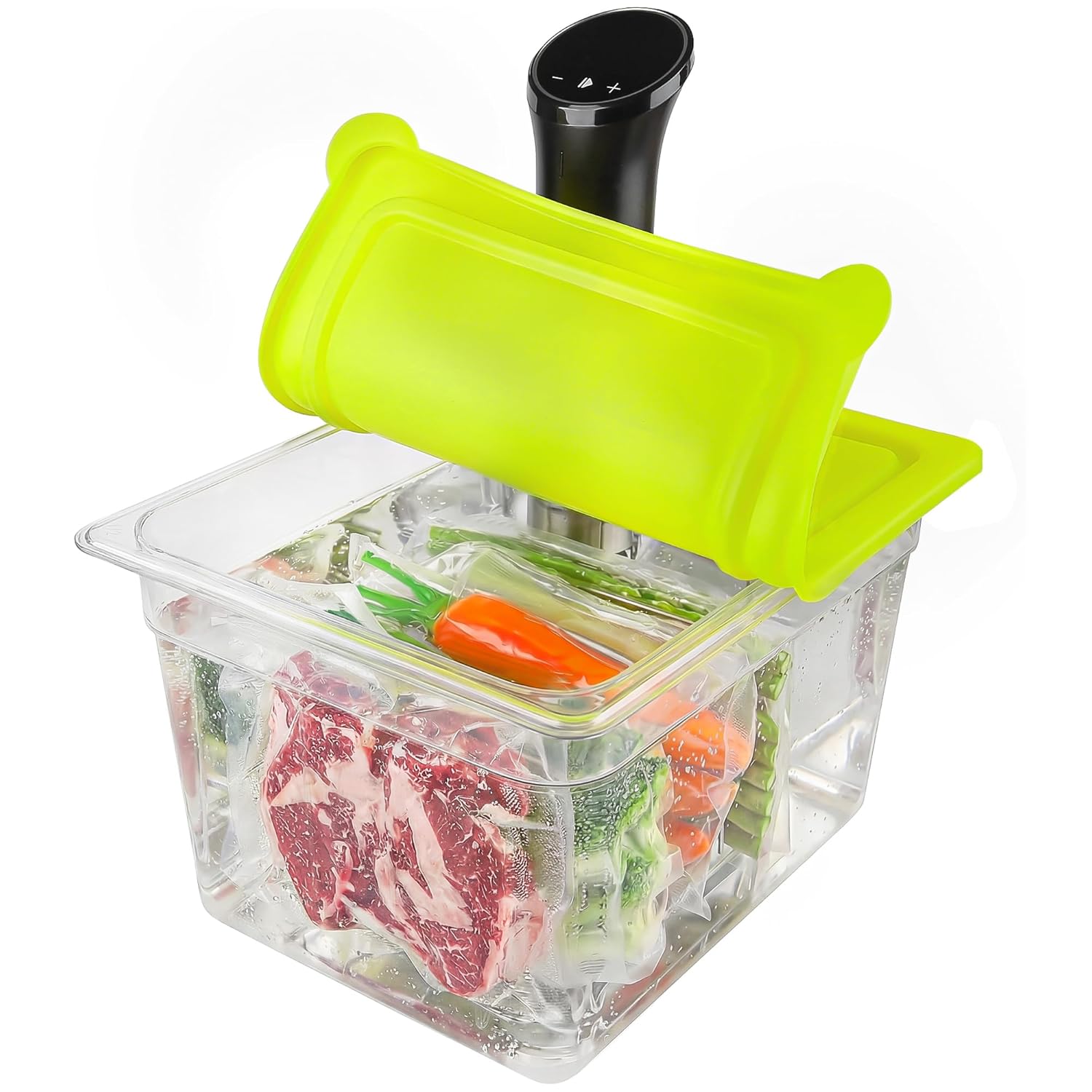
Polycarbonate insulates better than stainless steel, so the circulator does less work and water doesn't evaporate during long cooks. The C10 fits the major circulators including the Anova Pro and Inkbird via a cut-out lid (sold matched per model). The rack is the part most people underrate: it holds bags vertically, fully submerged, so water can circulate around every surface — the difference between evenly cooked chicken breasts and one undercooked edge. Lids cut both evaporation and surface heat loss, which is why an uncovered stockpot loses 1–2°F per hour but a lidded LIPAVI holds steady overnight.
Honest caveat: confirm the lid version matches your specific circulator before buying. The C10 universal lid fits most popular cookers, but model-specific cut-outs are sold separately for some.
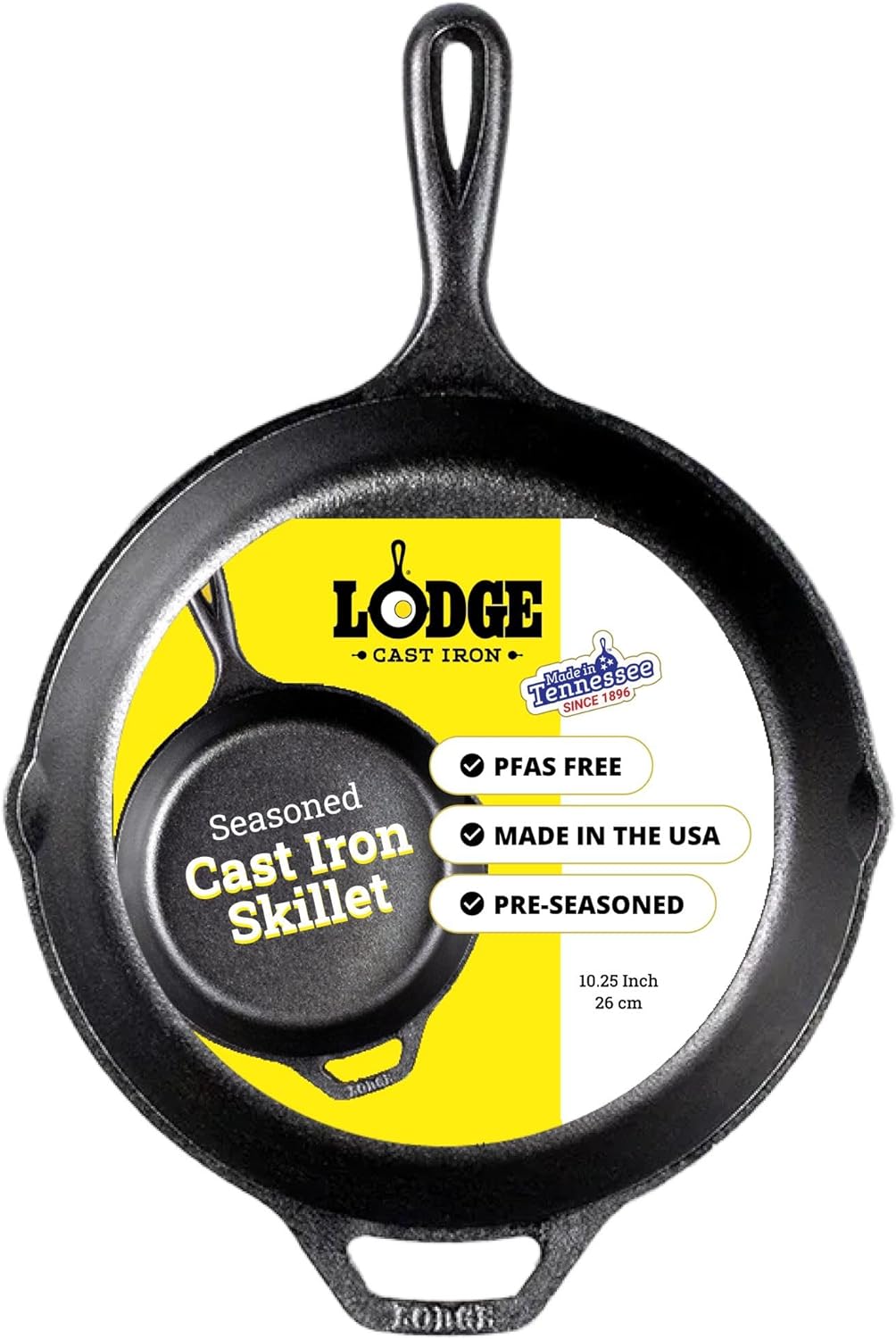
The Maillard reaction — the surface browning that creates steakhouse crust — kicks in above about 300°F (150°C) on the meat surface, but to develop it in 45 seconds per side (the only way to sear without re-cooking the centre) the pan itself needs to be 500°F+ when the steak hits it. Cast iron holds that heat through the entire sear without dropping. The 12-inch Lodge gives you room for two ribeyes side by side and costs roughly what a single fancy non-stick costs. Pre-seasoned from the factory, lasts decades.
Honest caveat: cast iron is heavy (about 8 lbs at 12 inches) and slow to heat. If wrist strain is a concern or your kitchen is small, the Matfer carbon steel below is lighter and warms up faster.
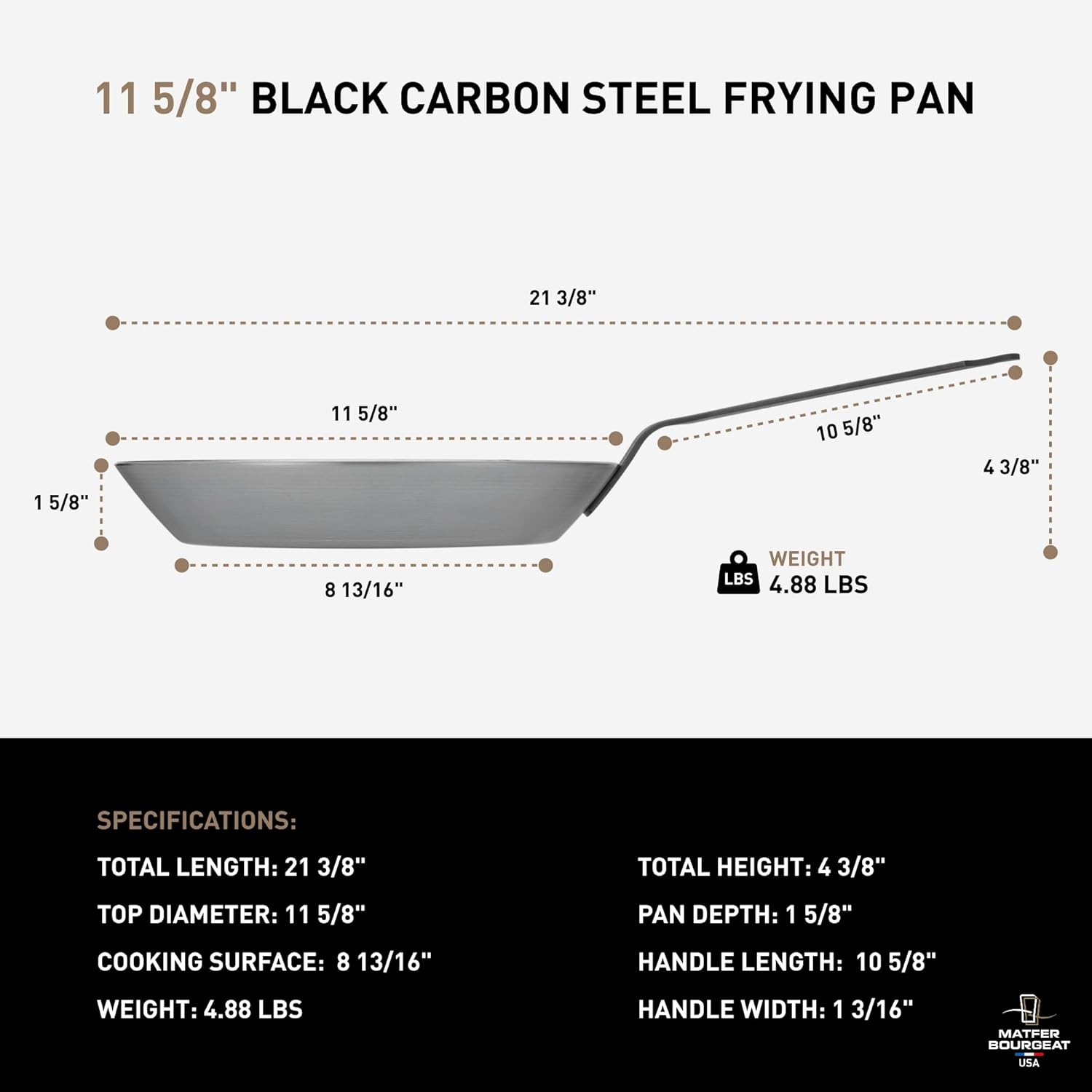
Carbon steel is the same material as cast iron — pure iron with a small amount of carbon — but rolled thin instead of cast thick. The result is a pan that holds the high-heat sear of cast iron but heats up in roughly half the time and weighs about half as much. The Matfer Bourgeat 11" is the standard restaurant model; black steel that develops a glassy seasoning layer with use and becomes effectively non-stick within a few months. The handle is welded rather than riveted, so cleaning is easy. The trade-off is shape: sloped sides instead of straight, less ideal for shallow-frying but better for the slide-the-steak technique used in restaurants.
Honest caveat: arrives raw and needs to be seasoned before first use. Strip the factory wax with hot soapy water, dry, then build seasoning over 3–4 oil-and-heat cycles. Worth doing once; the pan lasts a lifetime.
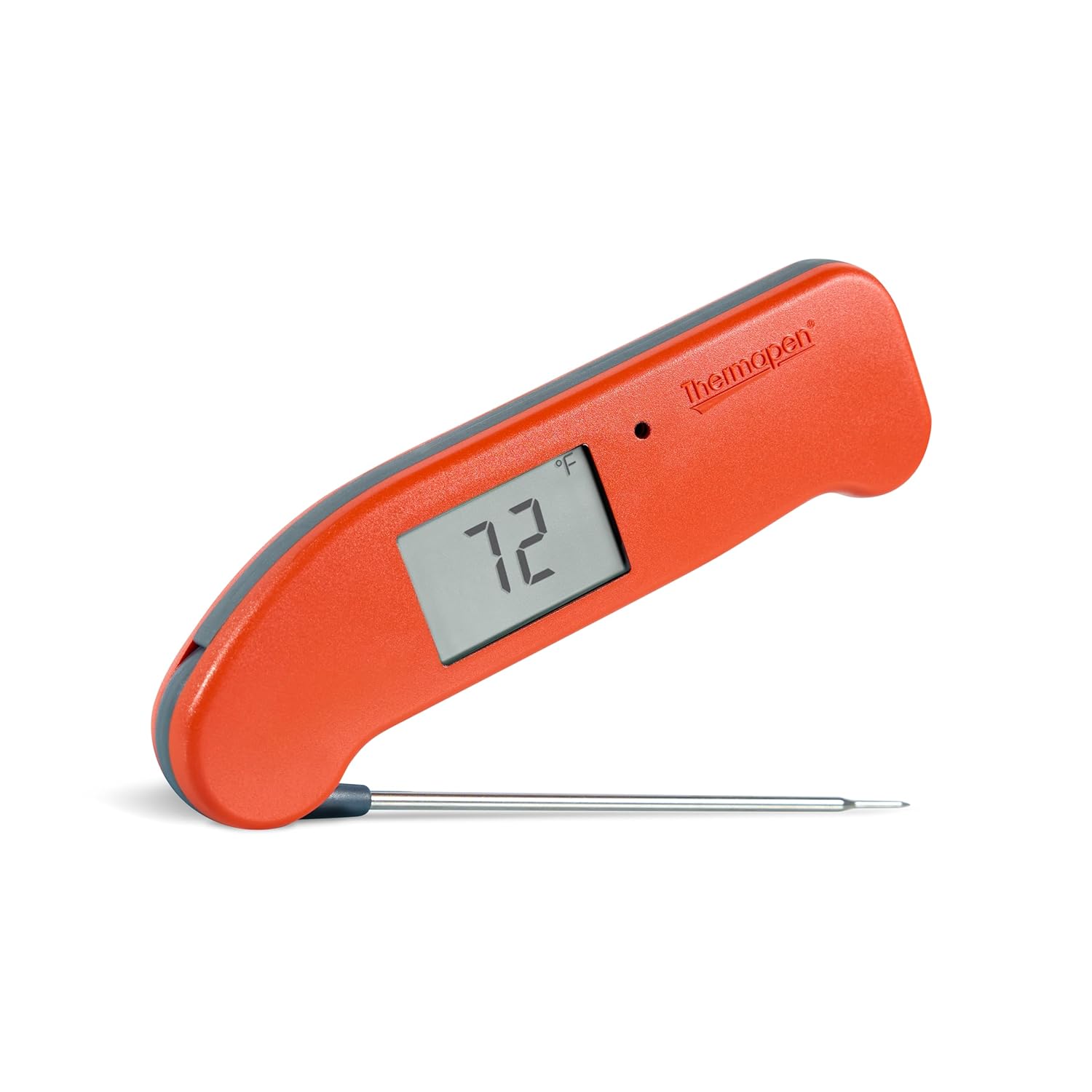
Two uses, both worth the price. First, sanity-checking the sous vide bath itself — circulators can drift, especially older ones, and a 2°F bath error compounds over a 90-minute steak. Second, post-sear: when you pull the steak off the heat the internal temperature climbs another 3–5°F from residual surface heat. Knowing precisely when to stop searing — rather than guessing — is the difference between 130°F medium-rare and 138°F medium. The Thermapen ONE reads to ±0.5°F in under a second, which means you can probe the steak while it's still in the pan without losing crust temperature. Lasts roughly 5 years on a single AAA battery.
Honest caveat: this is a $110 thermometer. Cheaper instant-reads exist (ThermoPro TP19, ~$25) and they work — but they take 3–4 seconds and lose accuracy over time. For someone who actually cares about a perfect sear, the Thermapen earns its price.