The three pans that cover almost everything
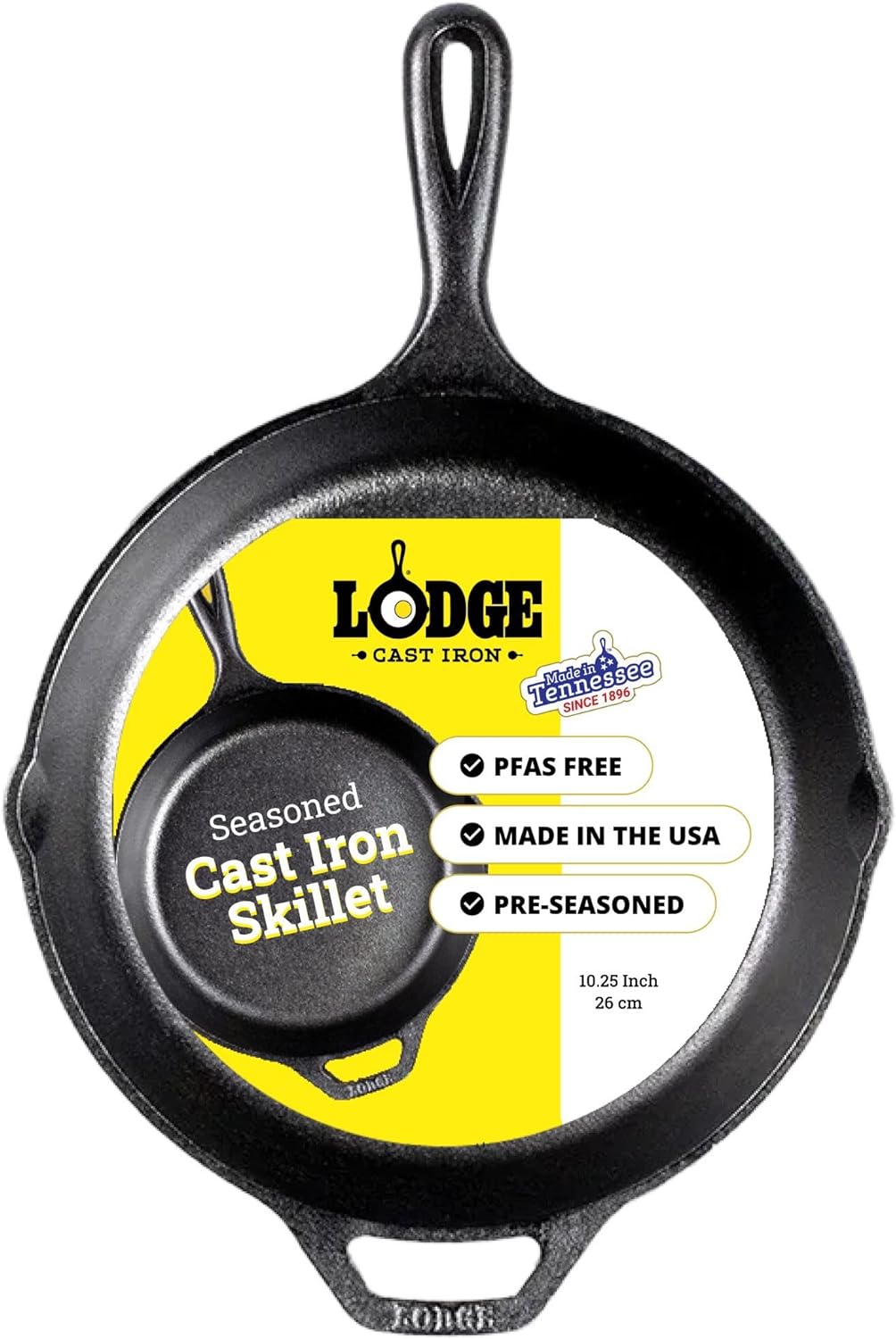
Lodge has cast iron in Tennessee since 1896 and the 10.25-inch is its workhorse model — the right size for two steaks, a whole skillet pizza, six eggs, or a half-pound of bacon. The factory seasoning is now genuinely usable from day one (it was rougher 15 years ago), and once you've cooked with it five or six times the seasoning layer locks in. Goes from stovetop to 500°F oven without thinking. The pour spouts on both sides matter more than they look — they keep render-and-pour bacon-fat work clean. At ~$25 it costs less than a tank of gas and outlives most marriages.
Honest caveat: 5 lbs of bare iron is heavy. If wrist strain is a concern, the same pan in 8-inch is half the weight; or look at carbon steel (lighter, same searing performance).
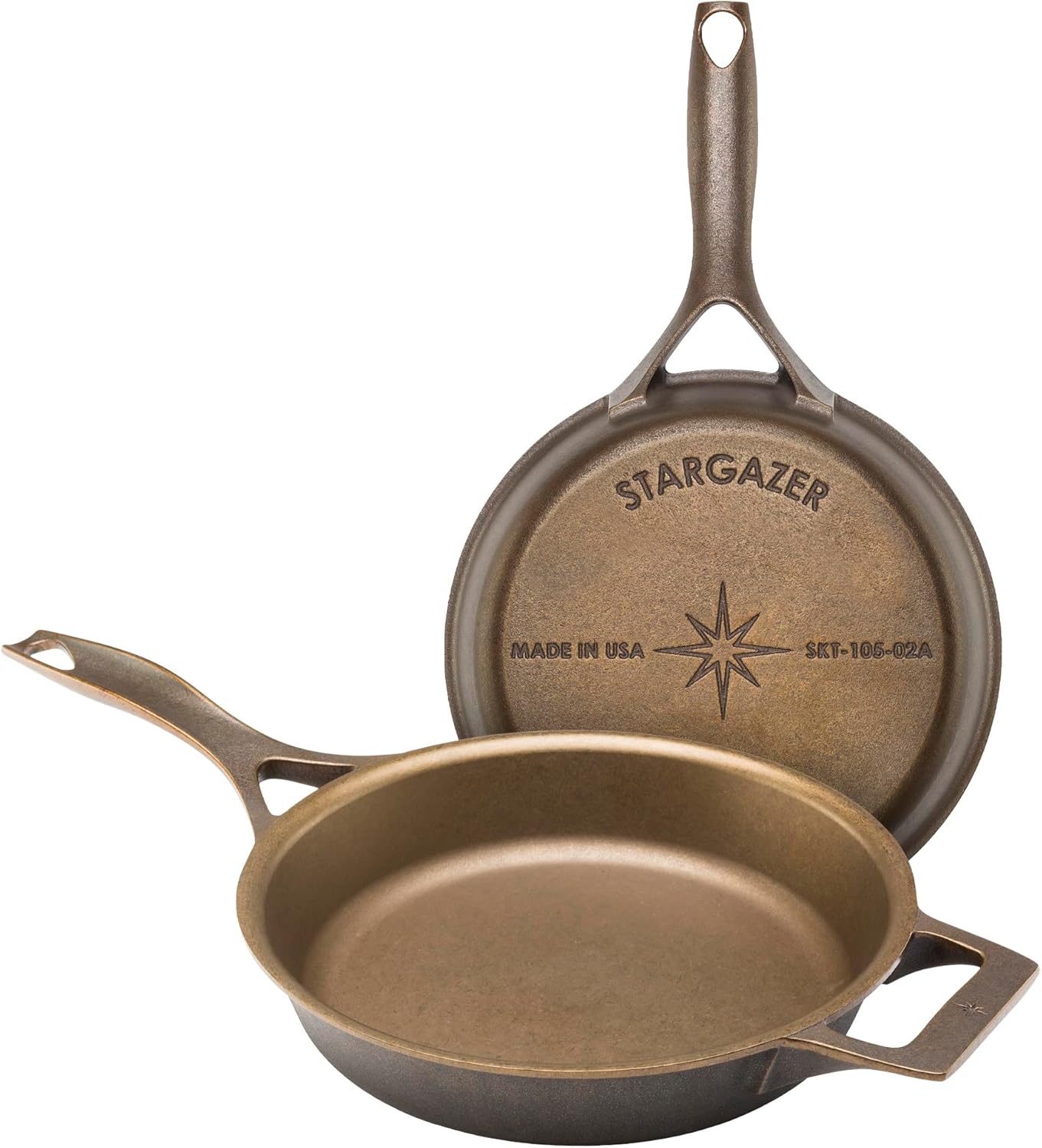
Pre-1950s cast iron — Griswold, Wagner, Birmingham Stove — was milled smooth after casting, which is why vintage pans are still hunted at flea markets for the slick surface they develop. Modern Lodge skipped that step to keep prices down (and the seasoning fills in the texture over time, which works). Stargazer is the modern American-made answer to vintage smooth iron: machined interior, longer balanced handle that stays cooler, and a smooth contemporary aesthetic. Once seasoned, food release approaches non-stick from the first cook rather than requiring months of build-up. At ~$130 it is five times the Lodge — the question is whether you cook eggs and fish often enough to value an easier release.
Honest caveat: at high searing temperatures (500°F+) the Lodge and the Stargazer behave identically. The premium buys easier release on delicate cooks, not better sear. For pure steak work, save the money.
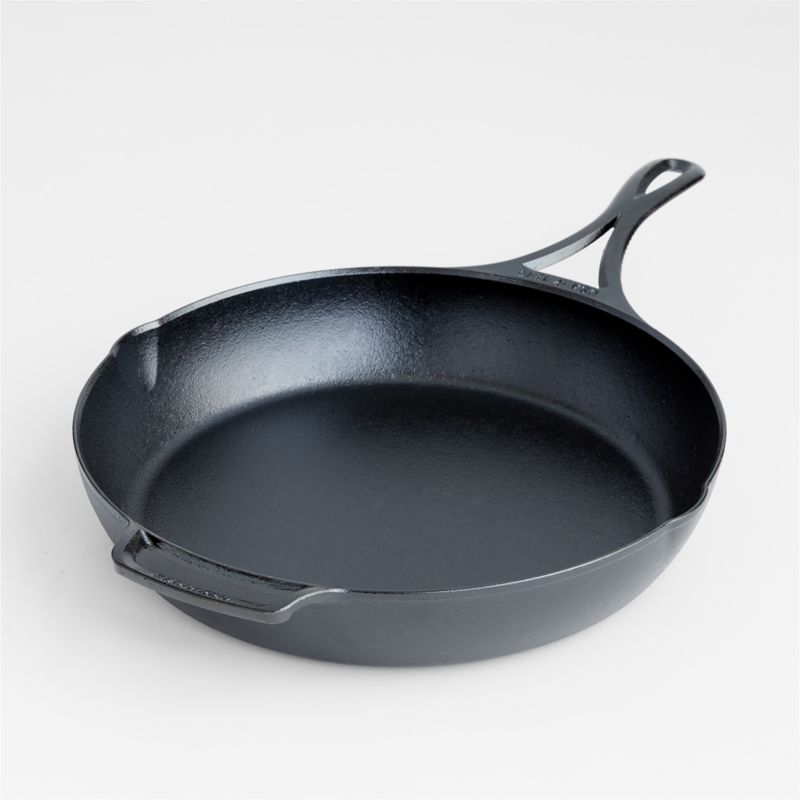
Lodge launched the Blacklock line as a direct response to the most consistent complaint about classic Lodge — the weight. A standard Lodge 12-inch skillet runs about 8 lbs; the Blacklock 12" is closer to 6 lbs, which is the difference between two hands and one for most people lifting it from oven to stove. The interior is machined smoother than standard Lodge (though not as polished as Stargazer), and the factory seasoning is applied in three layers rather than one, so food release out of the box is noticeably better than a brand-new classic Lodge. It's Wirecutter's "also great" pick alongside the Lodge Chef Collection. Same American foundry in South Pittsburg, Tennessee. Same lifetime durability.
Honest caveat: at the standard Lodge price ($25-$35) the extra ~$30 buys lighter weight and better factory seasoning, not better cooking. If lifting an 8-lb pan doesn't bother you, the classic Lodge above is the smarter spend.
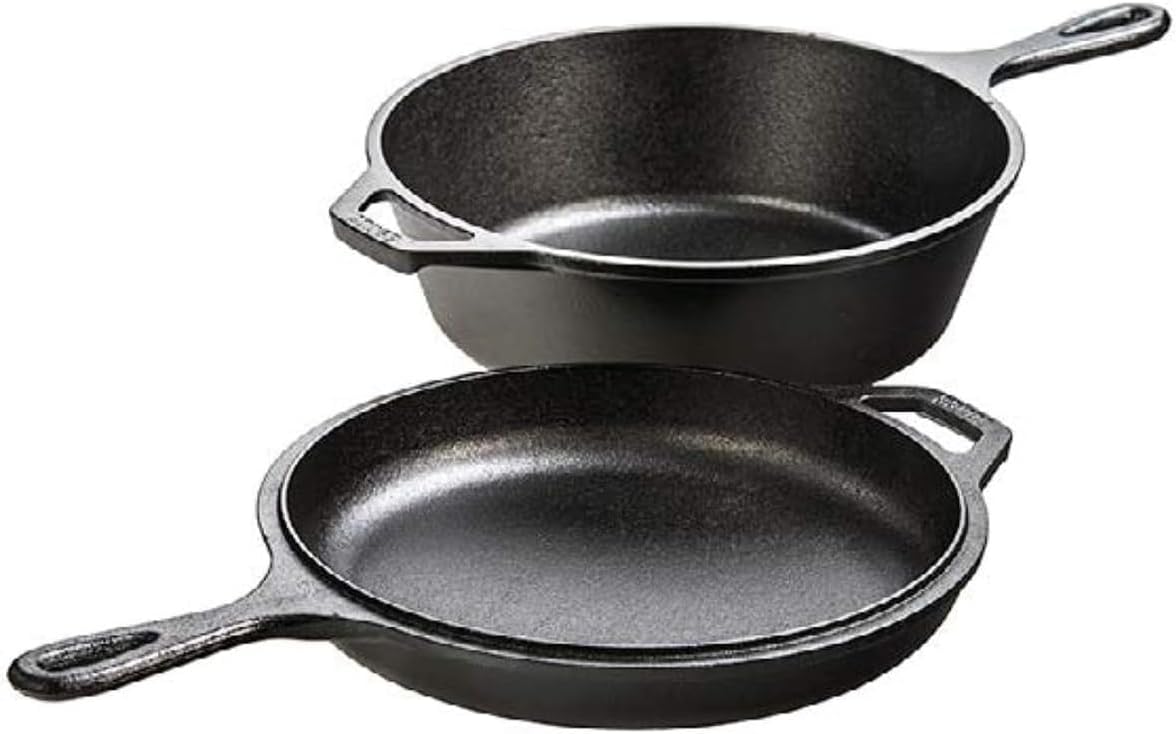
The Combo Cooker is the most underrated cast iron piece Lodge makes. The base is a 3.2-quart deep dutch oven; the lid is a full 10.25-inch skillet with its own handle that doubles as standalone cookware. For no-knead artisan bread (preheated cast iron is the cheap home substitute for a steam-injected bakery oven), the deep base traps moisture during the first 30 minutes of baking, then the lid comes off for the colour-developing second half. Same pan does braises, stews, and roast chicken sized for two. Effectively two pieces of cast iron for ~$50.
Honest caveat: not enamel-coated, so unlike a Le Creuset it isn't ideal for long acidic braises (slow tomato sauce will scour the seasoning over hours). For acidic long-cooks, use enamel; for breads, neutral braises and skillet roasts, this is the right tool.
The three accessories that actually matter
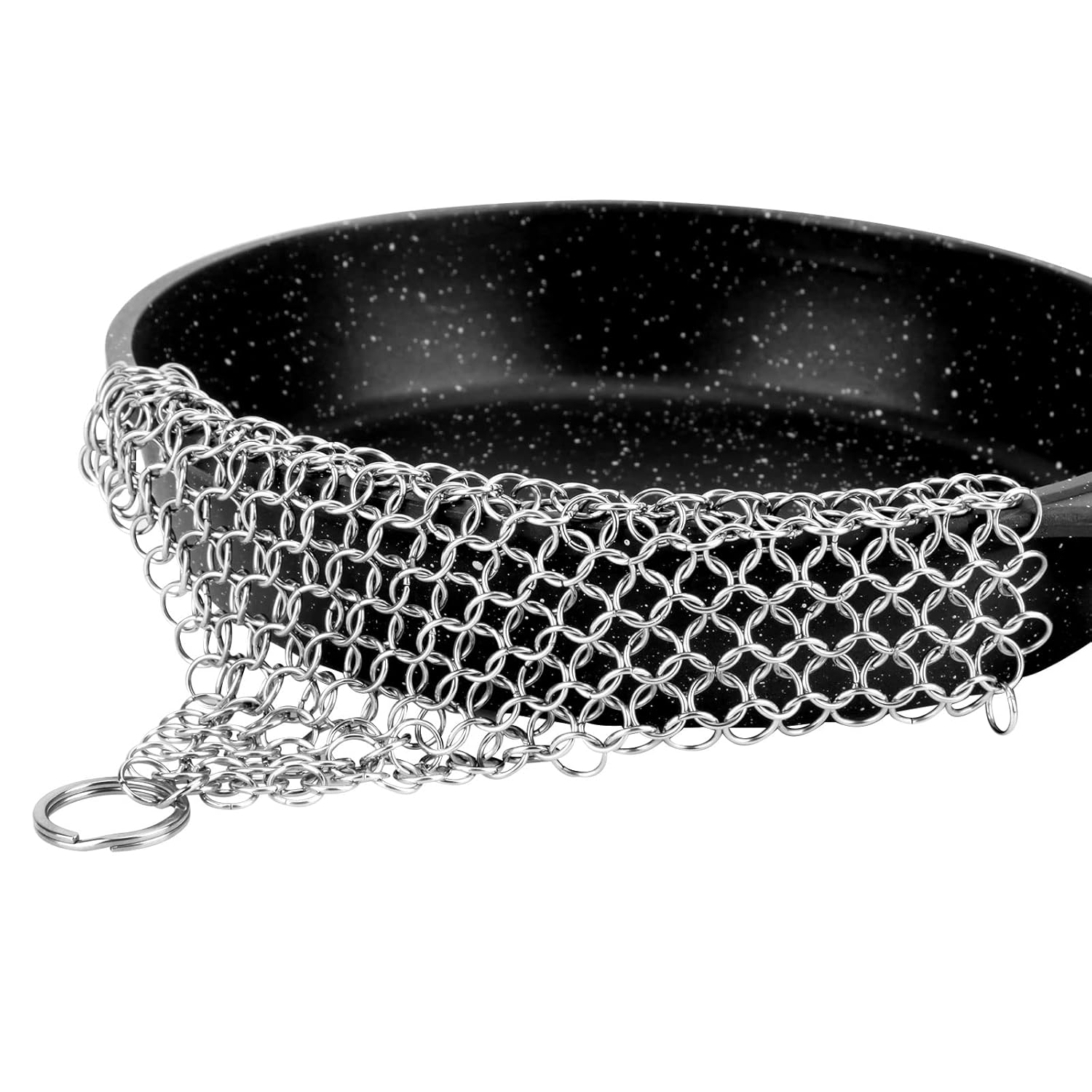
The right cast iron care is: hot water and a chainmail scrub right after cooking, dry on the burner, thin oil wipe. That is the entire routine. The chainmail does the heavy lifting — it removes stuck food and any oxidised oil that hasn't bonded to the seasoning, without abrading the seasoning that has bonded. Steel wool takes seasoning off; harsh scrubbers either don't work or strip the pan. Chainmail is the in-between answer that has been used by serious cooks for over a century. Dishwasher safe, fits in a coffee mug for storage.
Honest caveat: a small amount of dish soap is also fine on well-seasoned iron — the "never use soap" rule was true for lye-based soaps in the 1800s. Modern dish soap doesn't damage polymerised seasoning.
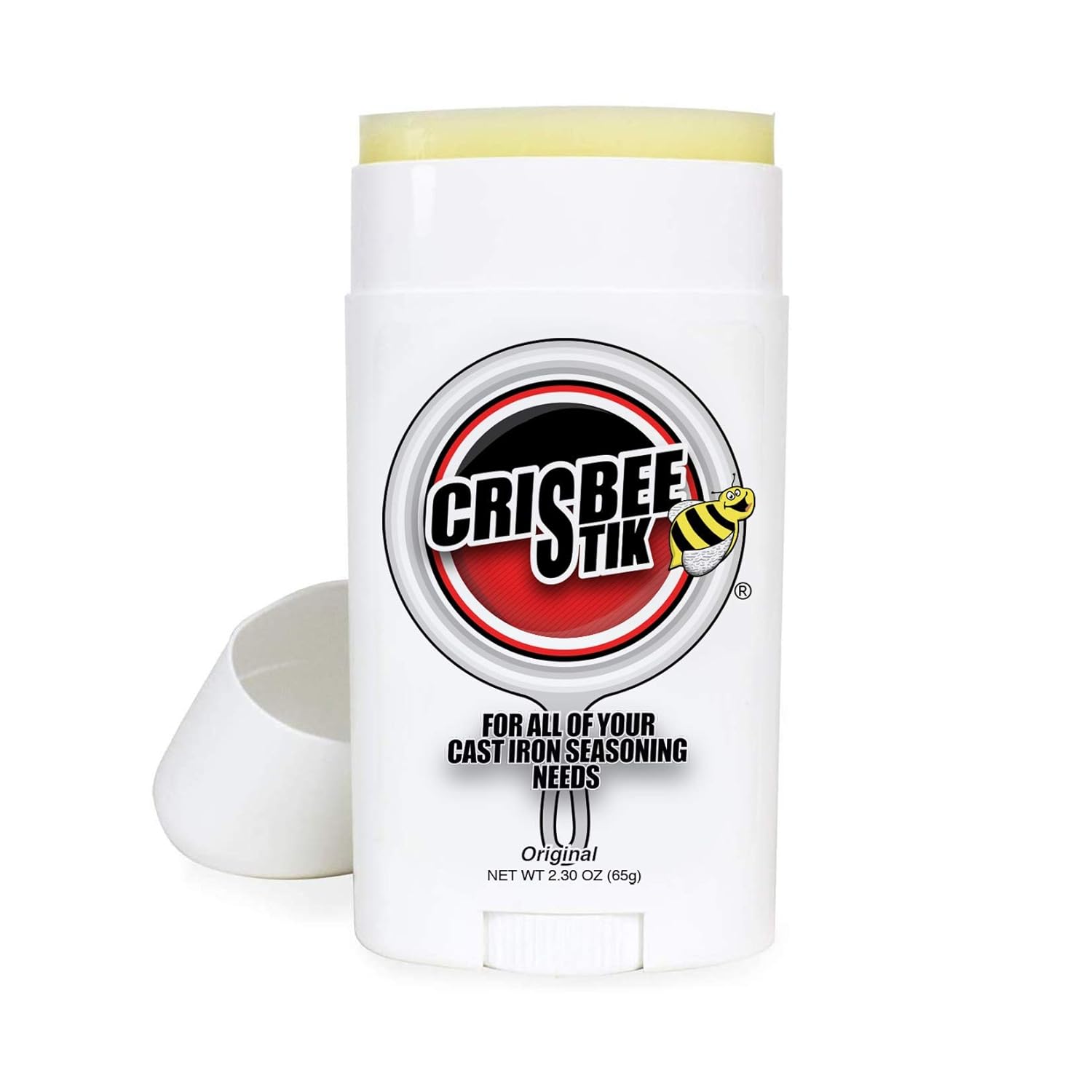
Most home-seasoning fails for one reason: too much oil. A thick coat of oil polymerises unevenly and leaves tacky patches. The fix is the thinnest possible film, wiped to look "dry," then heated past the smoke point. Loose oil makes this hard because pour amounts vary; flaxseed is the slickest but the most temperamental and flakes most often. Crisbee Stik is a purpose-made compound of palm-stearin and beeswax in stick form — you swipe it across hot iron and the coating self-levels to roughly the right film thickness. Forgiving, reliable, the right tool for anyone seasoning a new pan or reviving an old one.
Honest caveat: if you already have a well-seasoned pan and a routine you trust, you don't need a dedicated seasoning compound. Crisbee earns its place rebuilding seasoning on a rusted thrift-shop pan or starting a new bare-iron pan from scratch.
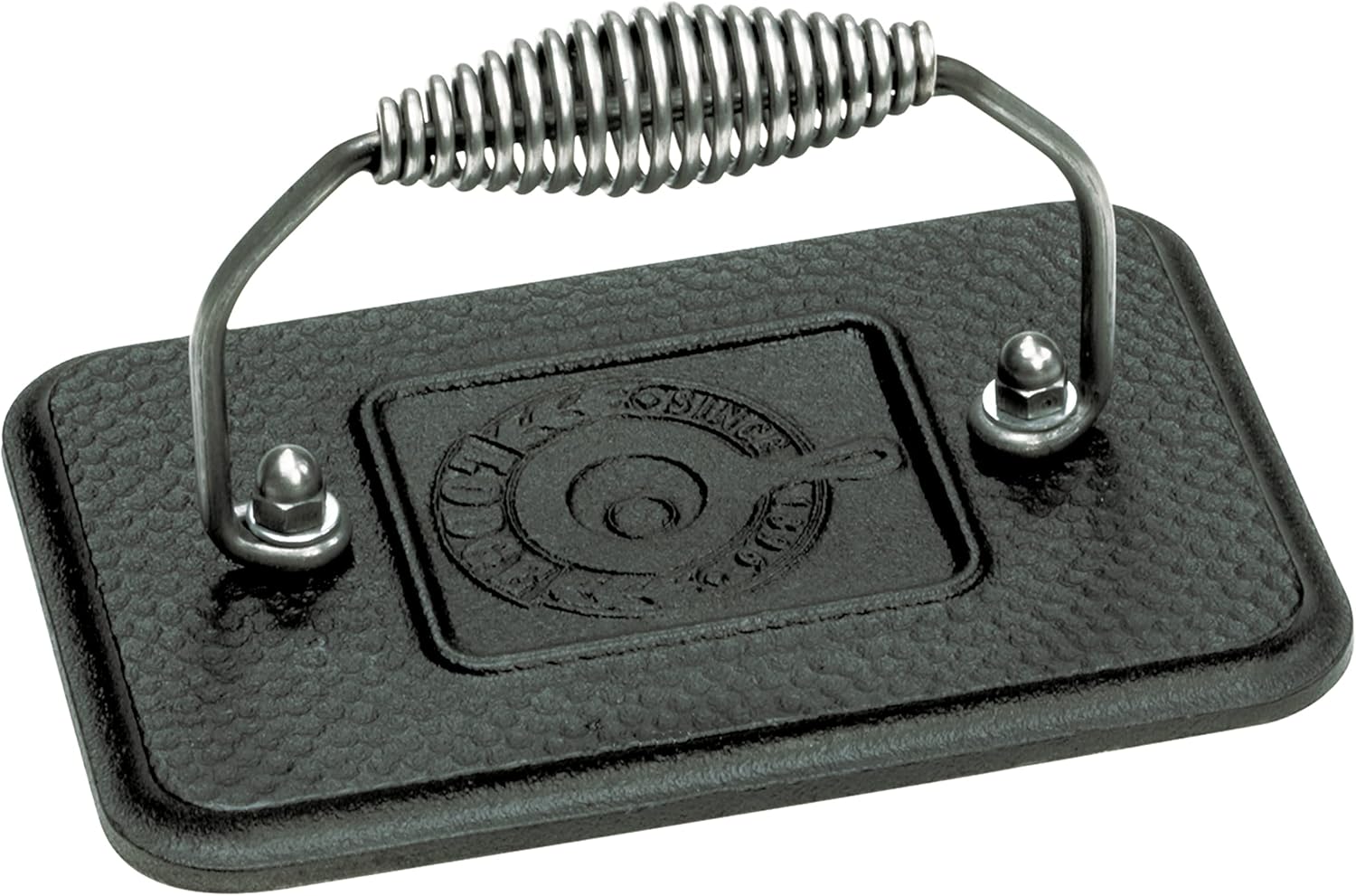
Bacon curls when it cooks because the fatty side shrinks faster than the meaty side; a grill press holds it flat and cooks it 30% faster with a better surface-to-pan contact area. Smashburgers — the kind with the lacy fried crust — physically require pressing the patty onto the hot iron for the first 15 seconds. Panini get the right crust pressed against pre-heated iron rather than melted under a low-temp panini machine. Lodge's version is plain cast iron with a wooden handle, pre-seasoned, and weighs enough to do the job without you needing to push.
Honest caveat: not a daily-use tool. The grill press earns its place for the 3–4 dishes it transforms, not for everyday cooking. If you don't make bacon, smash burgers or paninis, it will sit in the drawer.