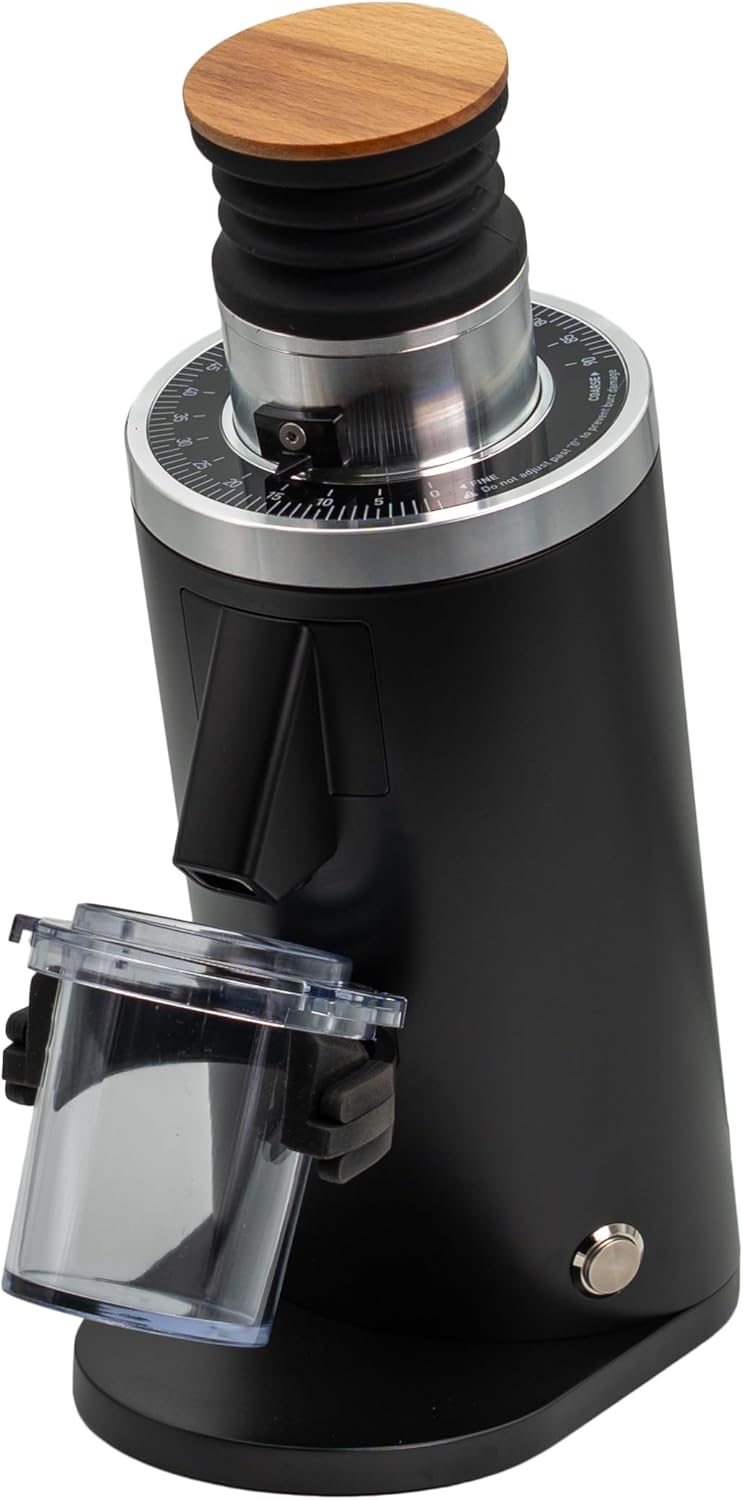
The DF54 uses 54mm stainless steel flat burrs — the specification you find in professional espresso bars, not $250 home grinders. Combined with a built-in ionizer that eliminates static, near-zero retention, and stepless grind adjustment, it produces a level of shot consistency that previously required a $500+ grinder. Single-dose loading means you grind exactly what you use, nothing sits stale. If you are serious about espresso and want the most grind quality per dollar available today, this is the answer.
Honest caveat: stepless adjustment has no click-stops, so dialing in takes a light touch. First-time grinder buyers may find the Baratza's numbered settings easier to learn on.
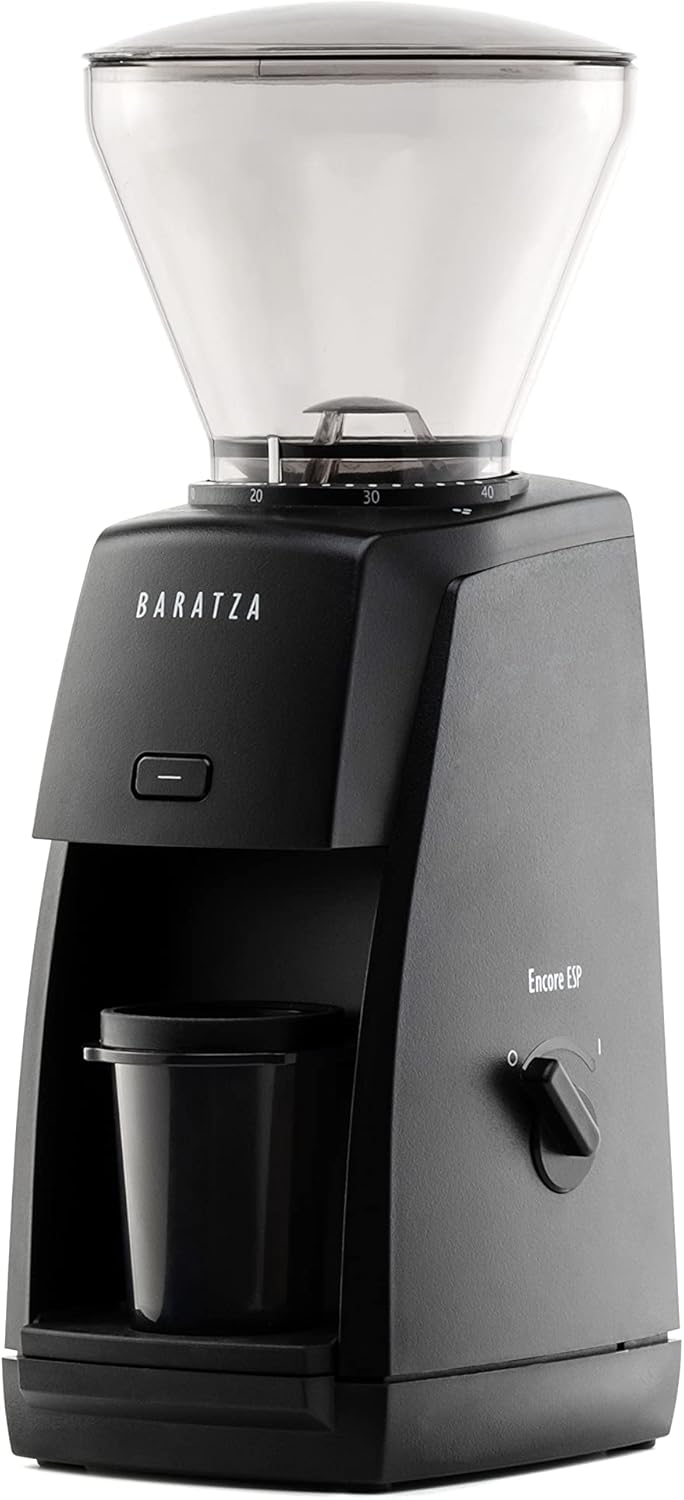
The Encore ESP is purpose-built for espresso, with 40 grind settings in the espresso range and M2 precision steel conical burrs. The real reason it earns loyal recommendations is Baratza's US-based repair service: replacement parts are available, repairs are straightforward, and the company has earned a reputation for standing behind the product. If you want a reliable electric grinder with numbered settings that are easy to learn and a brand you can trust for the long term, the Encore ESP is the choice.
Honest caveat: conical burrs at this price produce slightly less grind uniformity than the DF54's flat burrs. For most home use the difference is minor — but if maximum shot clarity is the goal, spend the extra $50 on the DF54.
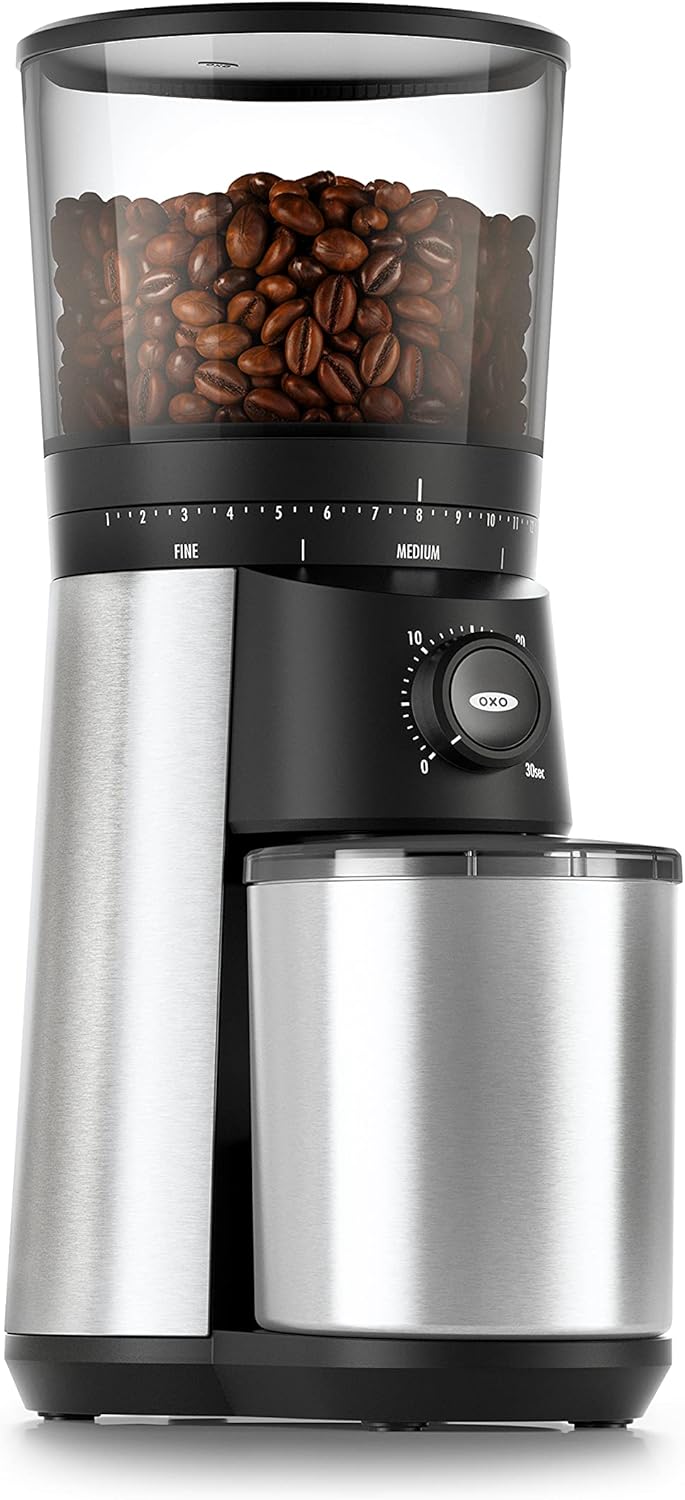
The OXO Brew uses 40mm stainless steel conical burrs with 15 grind settings and a one-touch start that remembers your last setting. It comes with an integrated scale and a static-reducing stainless steel grounds container. It won't outperform the Baratza or DF54 on grind consistency, but at $99 it replaces blade grinders and low-quality burr grinders entirely — and that alone is the most important upgrade most espresso setups need.
Honest caveat: 15 settings is limited for fine-tuning espresso. Dialing in a specific roast takes patience. If you find yourself wanting more grind precision within six months, save now and go straight to the Baratza.
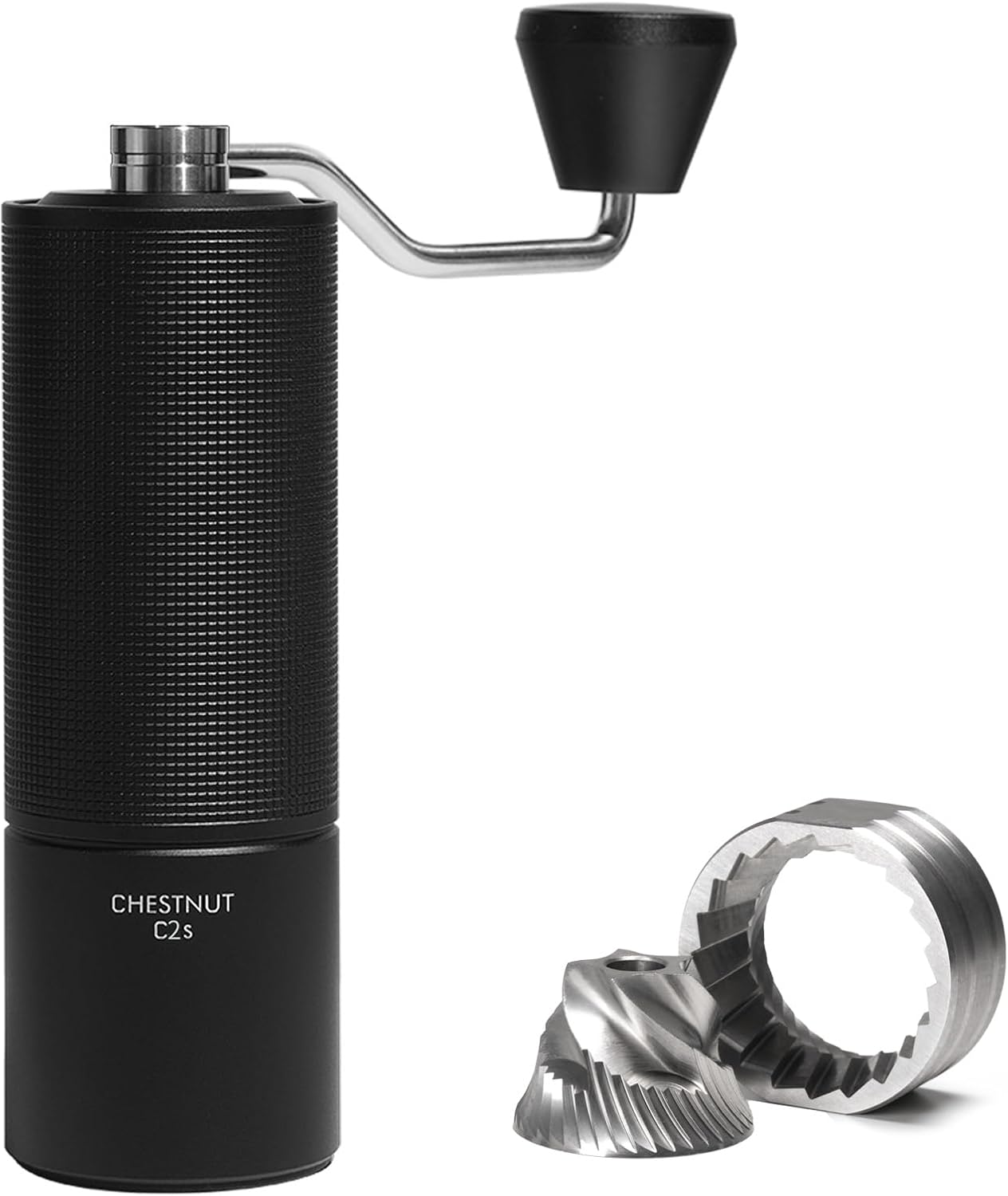
The C2S uses Timemore's S2C (Spike to Cut) conical burrs in a full-metal unibody — far above the build quality of other manual grinders at this price. With 36 adjustment levels and double bearing positioning, it produces consistent fine grinds appropriate for espresso. The trade-off is effort: 18g for a double shot takes 30–60 seconds of hand cranking, and the 25g capacity means it's a single-dose tool by necessity. Best for: travellers who want real espresso on the road, or anyone who wants to test serious espresso before committing to an electric grinder budget.
Honest caveat: manual grinding is a real commitment every morning. If you make two or more drinks a day, the effort accumulates. Budget for an electric grinder within a year if you stick with espresso.