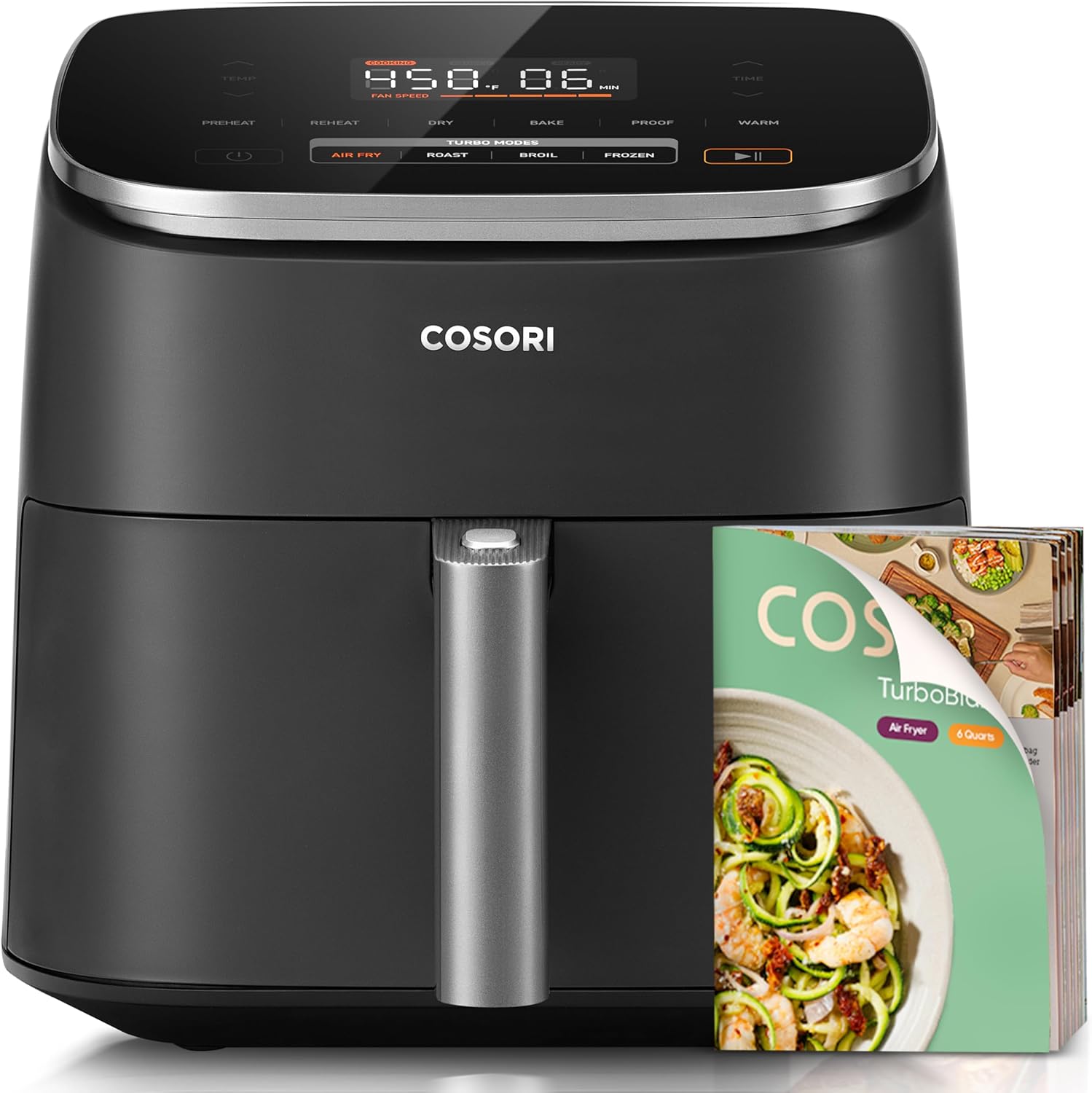
The TurboBlaze runs a DC motor at 3,600 rpm — roughly 4× faster than standard air fryer motors. Faster fan speed means more even heat distribution and faster crispiness without overcooking. The 6 Qt PFAS-free ceramic basket comfortably fits a whole chicken or enough food for 3–4 people. Nine cooking functions including air fry, roast, bake, broil, dehydrate, and proof. At the same price as the 4 Qt Ninja AF101, the only reason to choose the smaller model is if counter space is genuinely the constraint.
Honest caveat: at ~$100 it's a strong value, but prices fluctuate. Check current price before assuming it matches the Ninja AF101.
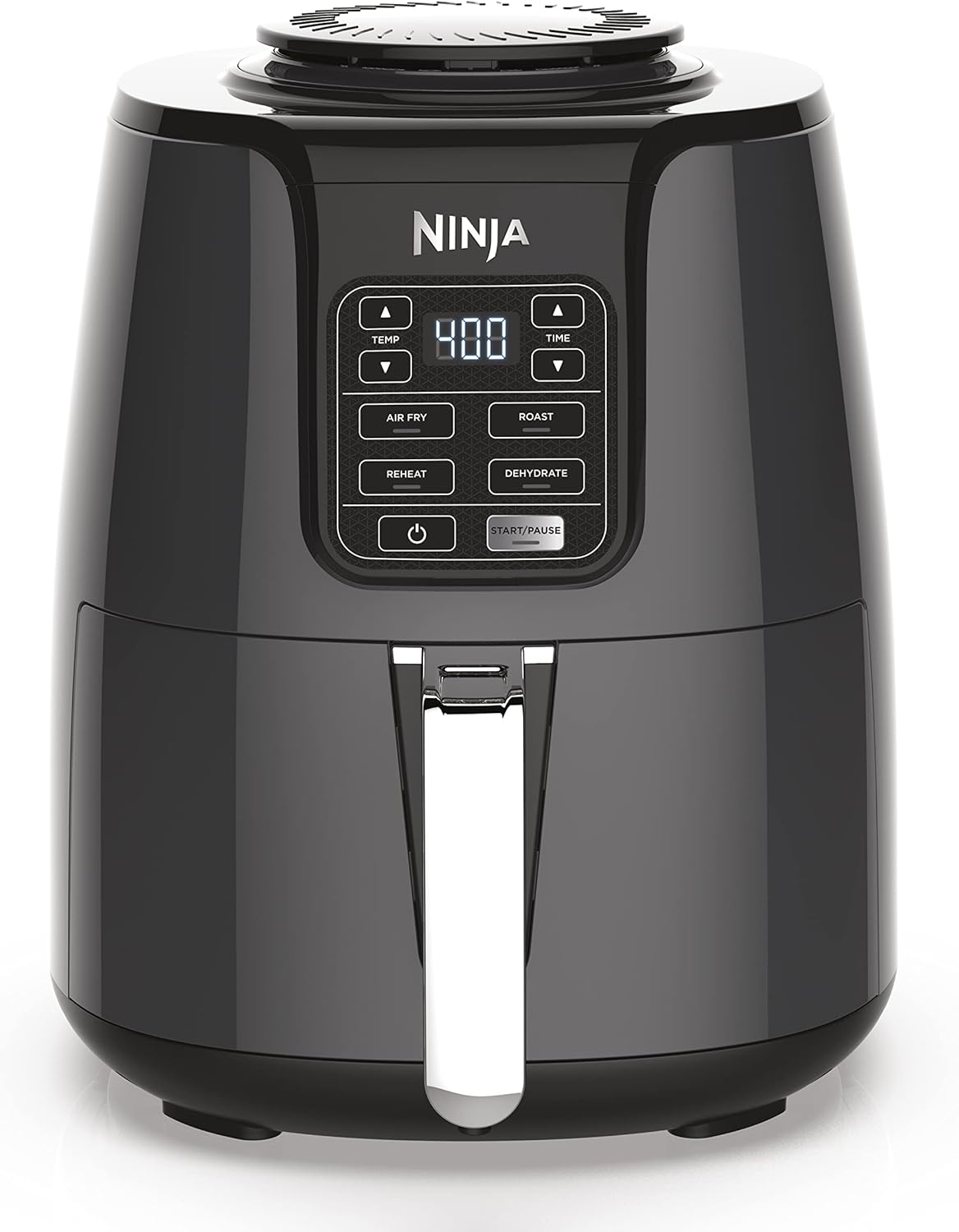
The AF101 is Ninja's proven starter model with over 60,000 reviews. Ceramic-coated PFAS-free basket, dishwasher-safe parts, wide temperature range from 105°F for dehydrating up to 400°F for crisping. At 4 Qt it's the smallest practical size for solo cooking or small sides. At roughly the same price as the Cosori TurboBlaze, the only genuine advantage is its smaller footprint — the Cosori wins on capacity and motor speed at the same price point.
Honest caveat: if you occasionally cook for guests or want to batch cook, the 4 Qt will frustrate you. The Cosori TurboBlaze is a better use of the same money unless counter space is the hard constraint.
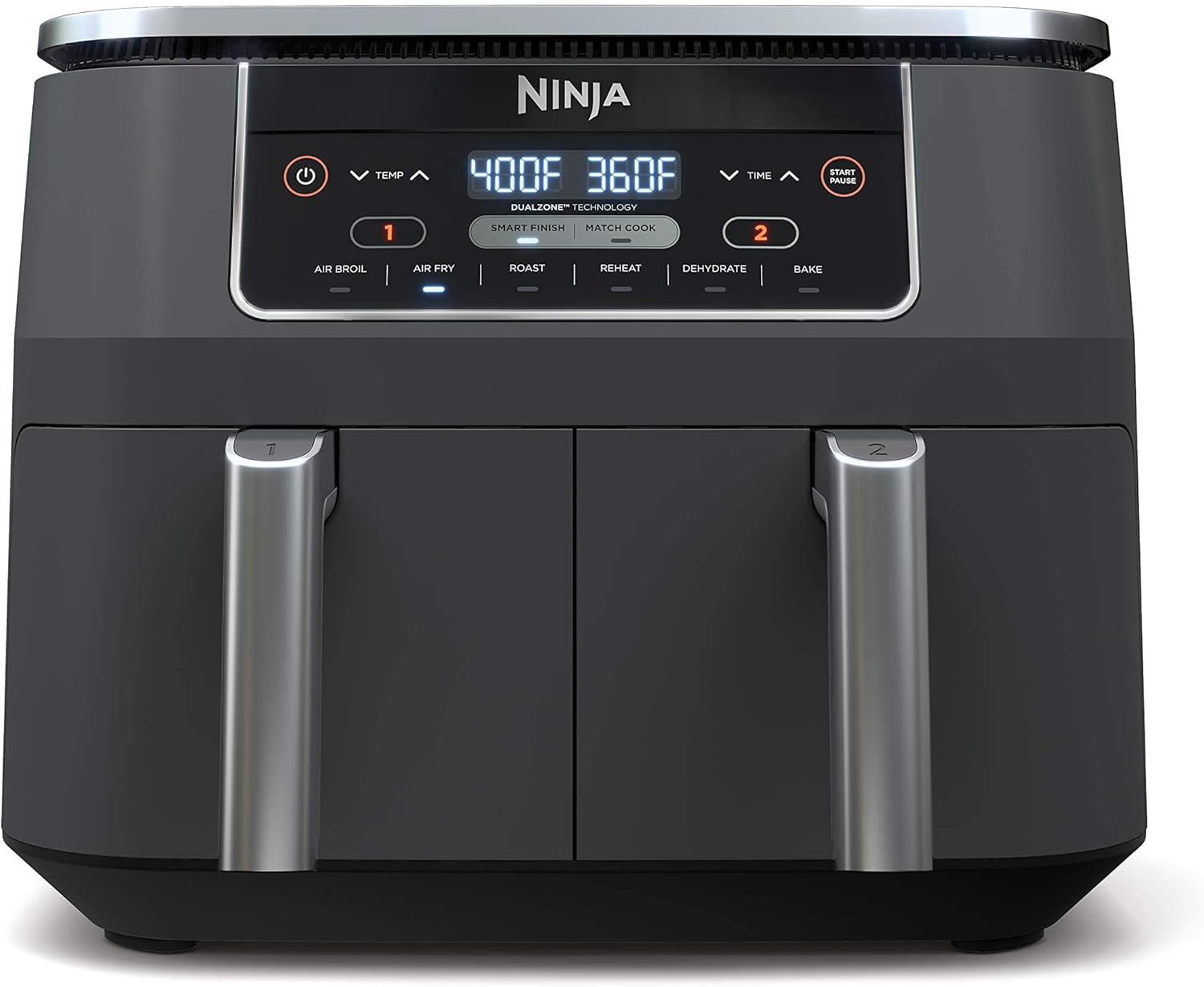
DualZone solves the most common air fryer complaint: cooking in batches. Two 4 Qt baskets operate independently — different temperatures, different times — and Smart Finish syncs the end time so everything is ready together. Chicken thighs and broccoli, simultaneously, no flavour crossover. PFAS-free ceramic coating on both baskets. At ~$160 the premium over the single-basket models is justified for anyone regularly cooking for 3 or more people.
Honest caveat: the dual basket design means less single-basket depth — a whole chicken fits better in a single 6–8 Qt basket. For batch cooking and complete meals, it's excellent. For large single items, a single large-basket model works better.
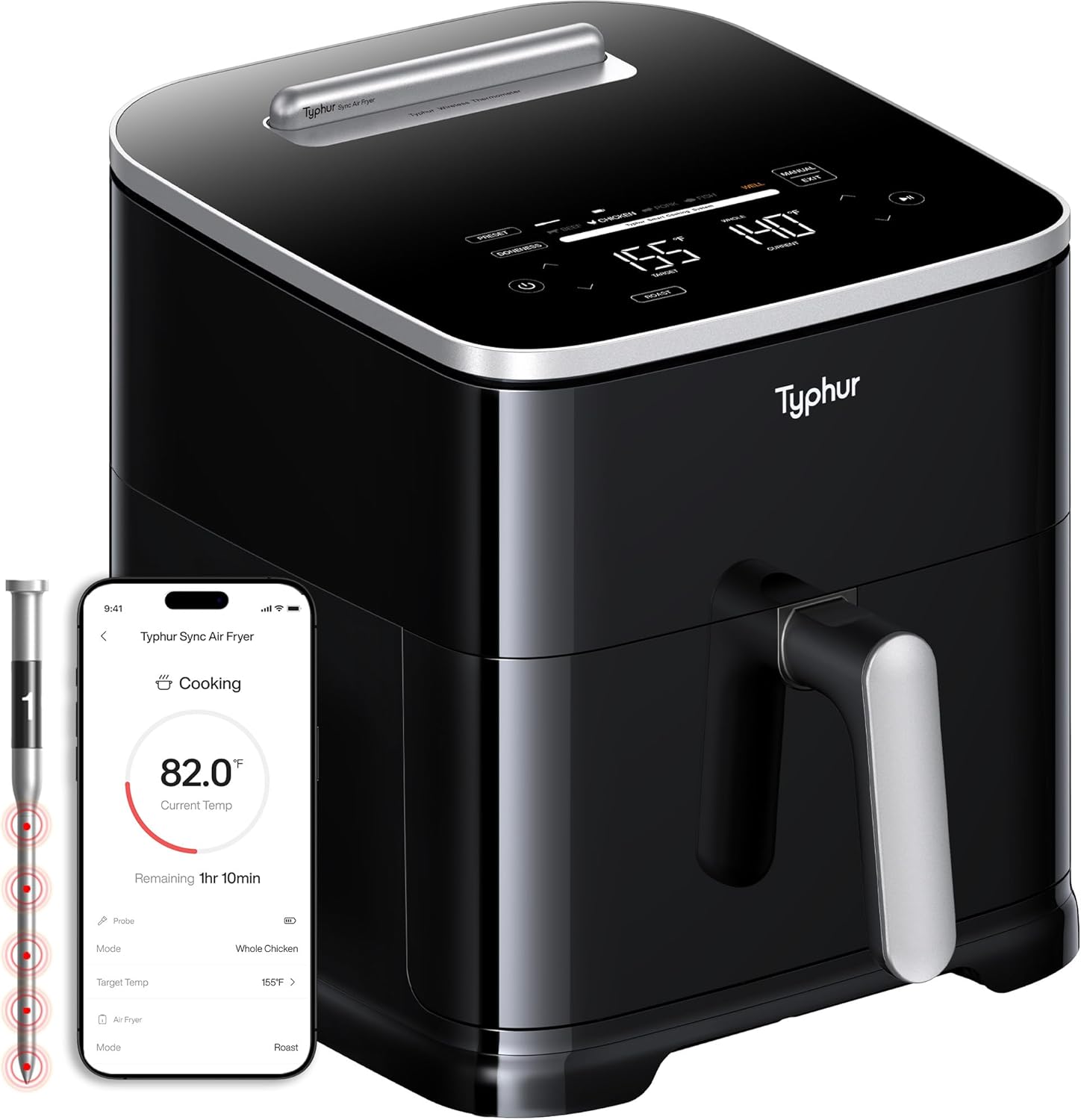
The Typhur Sync's defining feature is its built-in wireless probe: insert it into the meat, set a target internal temperature, and the fryer stops automatically when it's reached. No opening the basket to check, no cutting in to look. At ~$200 it's double the Cosori TurboBlaze, which means the thermometer feature needs to be genuinely useful to justify the cost — it is, if you cook chicken, pork, or fish regularly where internal temp is the difference between safe/dry and perfectly done. PFAS-free ceramic, 8 Qt, dishwasher safe.
Honest caveat: if you mostly air fry vegetables, fries, or reheated food, the wireless thermometer adds nothing and the ~$100 premium over the Cosori is wasted. The feature earns its cost only if you cook proteins regularly.
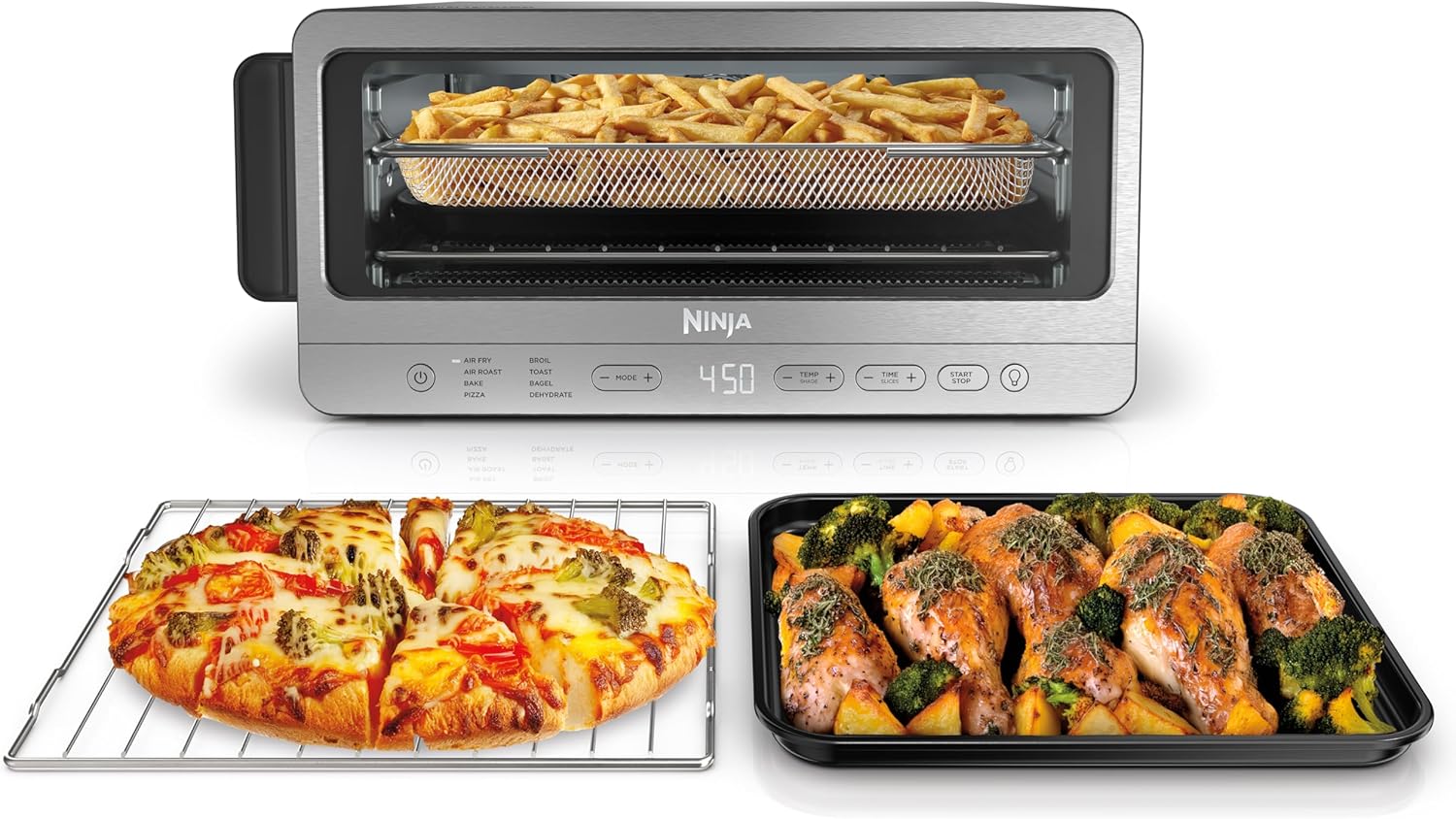
At 17.4 Qt the SP151 does what no basket air fryer can: fit a full 13×18" sheet pan, bake a pizza, or roast a large chicken with room to spare. The flip-up storage design reclaims 50% of its counter footprint when stored. Eight cooking functions including air fry, bake, roast, broil, toast, bagel, dehydrate, and keep warm. The ceramic non-stick pan is PTFE/PFOA-free. At ~$250 it replaces a toaster oven and a basket air fryer in one — the right trade-off if you do both.
Honest caveat: it's a countertop oven first, air fryer second. For pure air fry performance — crispiness, speed, basket convenience — the smaller dedicated models are better. This wins on versatility and raw capacity, not air fry performance per se.